
Portable sand and aggregate moisture meters
A handheld TDR meter gives you gravimetric moisture from the pile in about two seconds. No sample prep, no oven, no waiting for a lab result that describes material you already batched.
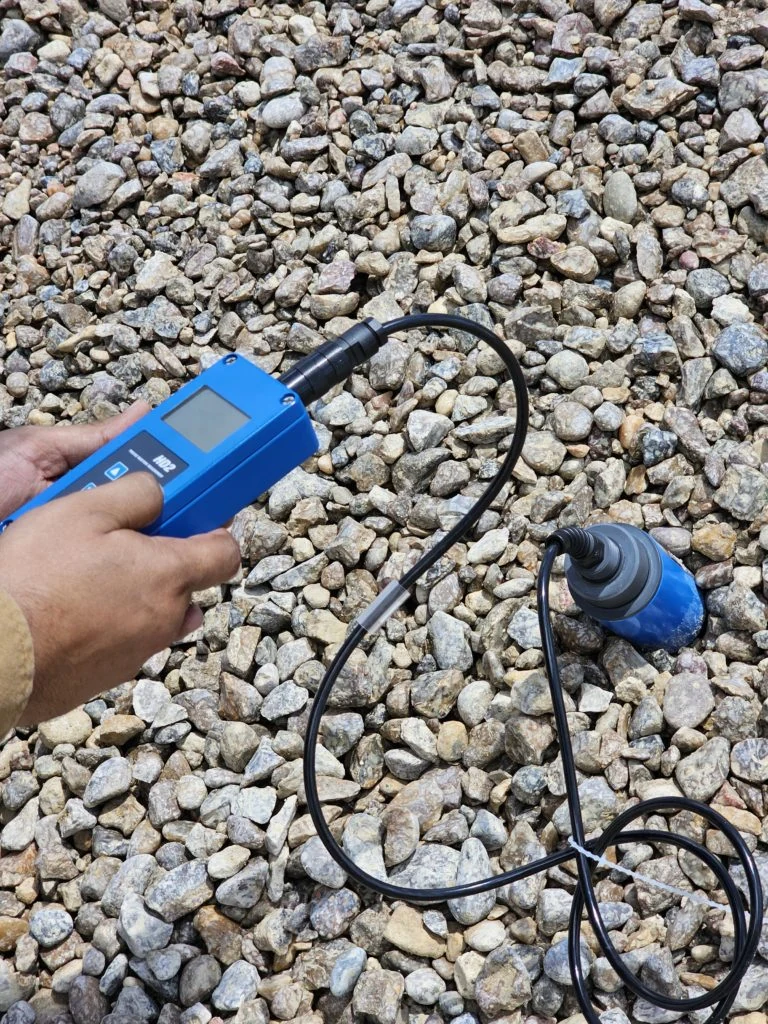
One display, three probes
The HD2 display runs SONO M1, M1C and M2. Which probe you need is decided by the material, not the reading.
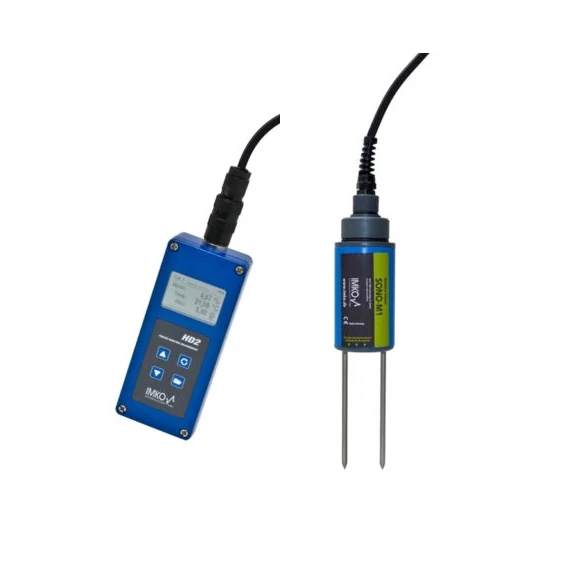
HD2 + SONO M1
Handheld meter for sand, gravel, crushed stone and expanded clay. Reading in about two seconds, straight from the stockpile.
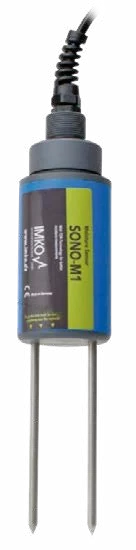
SONO M1C
Coated-rod version of the M1 for high-conductivity materials that defeat standard probes.

SONO M2
Slimline probe for deeper penetration into a stockpile. Telescopic extension reaches two metres.
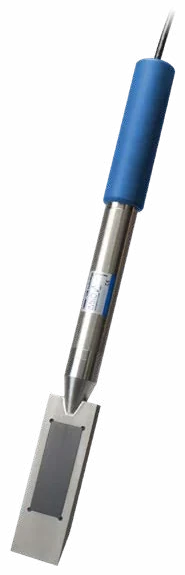
SONO WZ
Portable probe for water content and conductivity in ready-mix concrete. Result before the truck finishes unloading.

SONO WZ CONNECT
SONO WZ with integrated Bluetooth. Pairs to a phone running the SONO CONNECT — no separate display unit.
Conductivity decides, not particle size
Probes are differentiated by resolution and measuring range. The higher the conductivity range a probe handles, the lower its resolution and accuracy — so you take the narrowest probe your material allows, not the widest.
Standard sand, gravel and crushed stone go to the SONO M1 with uncoated 130 mm rods. Conductive materials — foundry return sand, blast furnace slag, fly ash, iron oxide, lime, lignite coal — need the coated 100 mm rods of the M1C, which trades some resolution for the ability to read at all.
The M2 is a different axis: slimline, for reaching past the dry crust deeper into a pile, with a telescopic extension to two metres.
Send us your material list
If you are running conductive material — foundry sand, slag, fly ash — the probe choice matters more than the display. Tell us what you measure and we will specify it.
Houston, Texas · Most quotes answered within one business day