
Check the load before it enters the plant
Verify moisture on incoming sand, gravel and crushed stone at the stockpile or the truck. No lab, no oven, no waiting.
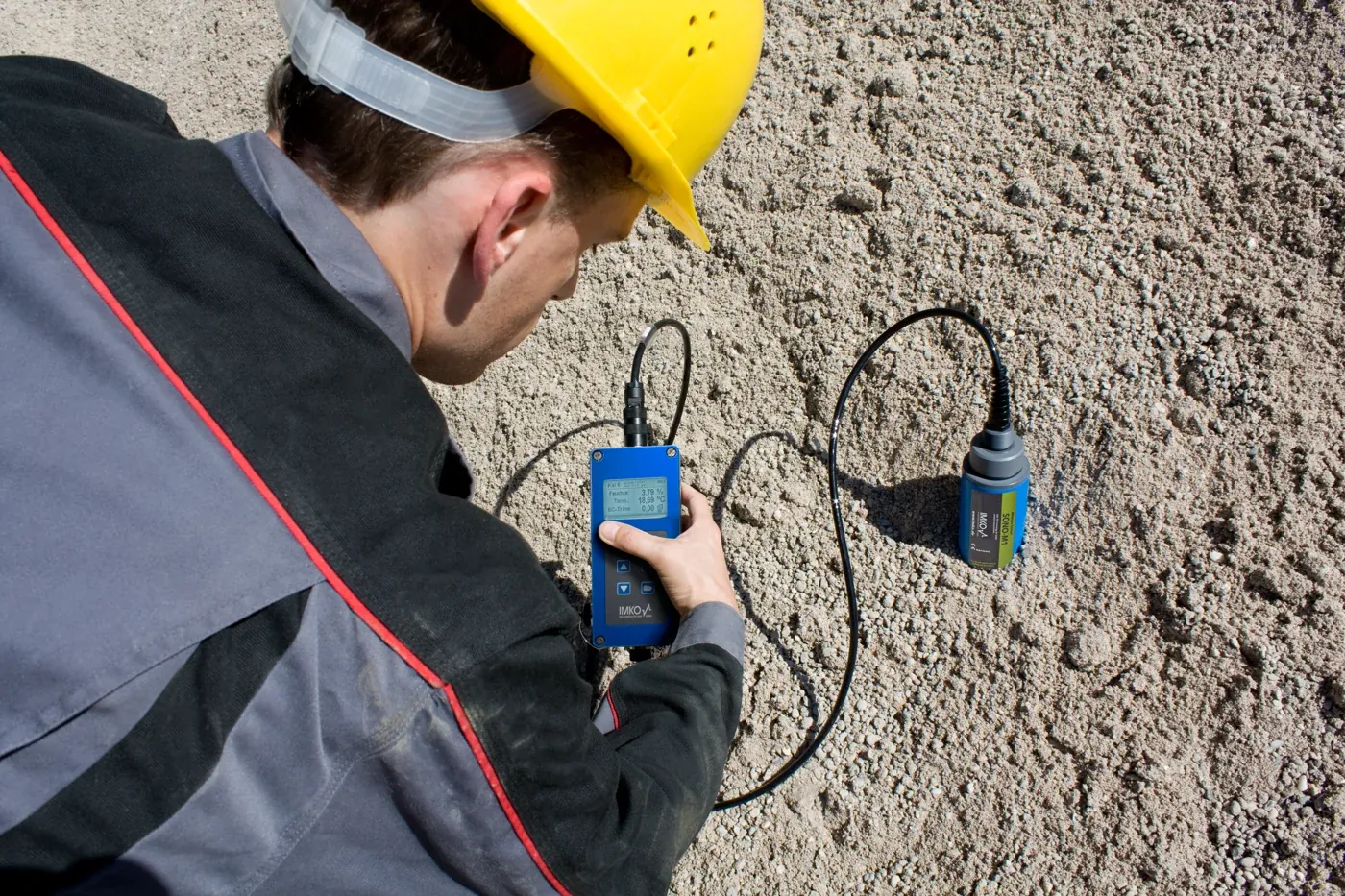
The number nobody owns
Every other measurement point in a concrete plant sits inside the plant. Delivery is the one that happens before the material is yours to control — and it is where moisture varies the most.
A stockpile is not one material. Rain runs off the crown and collects at the toe. The face that has been in the sun since morning is drier than the material two feet behind it. Sand delivered yesterday and sand delivered last week drain differently. Draw from different parts of the same pile and you get different moisture, which means different mix water, which means a different water-to-cement ratio than the one you designed.
None of that is visible. A pile that looks damp and a pile that is running two points wetter look identical from the loader cab.
What a reading at delivery actually buys you
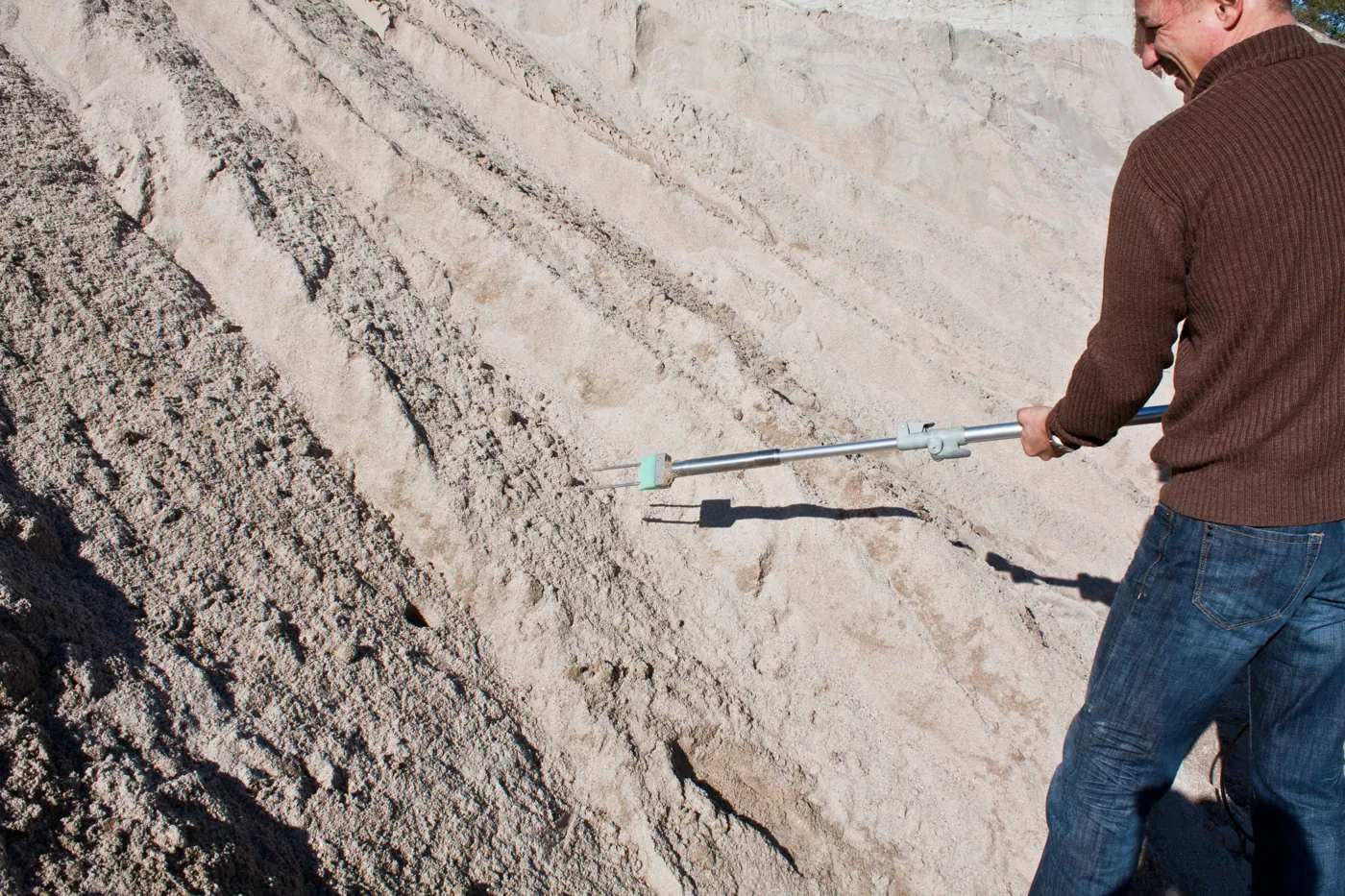
The first thing is commercial rather than technical. If you buy aggregate to an agreed maximum moisture content, a portable meter verifies that on delivery, in real time and without a laboratory. You are weighing water and paying for it as though it were aggregate. A reading at the truck settles that before the load is tipped, not three days later when a lab result comes back on material you have already used.
The second is coverage. Most plants instrument one or two aggregate silos and run the rest on assumed values. Materials that are not measured in the process can be measured quickly here and considered in the recipe — which closes the gap on everything that does not have a dedicated sensor on it.
The third is diagnostic. When batches start drifting and nobody knows why, a handheld reading at the pile tells you within seconds whether the problem is upstream of the plant or inside it.
- Verify contracted maximum moisture content on delivery, in real time and without a laboratory
- Reliable measurement of sand, gravel and crushed stone up to 32 mm, plus expanded clay
- Aggregates not measured in the process can be checked quickly and considered in the recipe
- Calibrations for all common aggregates pre-installed; individual materials can be added
- TDR is robust and independent of wear, so it stays stable in the long run
- Data acquisition and advanced parameterization with a PC via optional accessories
Taking a reading that means something
Get past the crust
The outer few inches of a stockpile are not the pile. Sun and wind dry the surface while the bulk stays wet. Push the probe in past the dried layer, or use the SONO M2 with its telescopic extension where you need to reach two metres in.
Take more than one
One reading describes one litre of material. The HD2 displays individual readings and a running average on the same screen for exactly this reason — take several across the working face and use the average.
Sample where you load
A reading from the end of the pile you never dig into is a number about material that is not going into your mix. Measure where the loader is actually working.
Match the probe to the material
Standard sand, gravel and crushed stone read on the SONO M1 with uncoated rods. Conductive material — foundry return sand, blast furnace slag, fly ash, lime, iron oxide — needs the coated rods of the M1C.
Delivery instruments
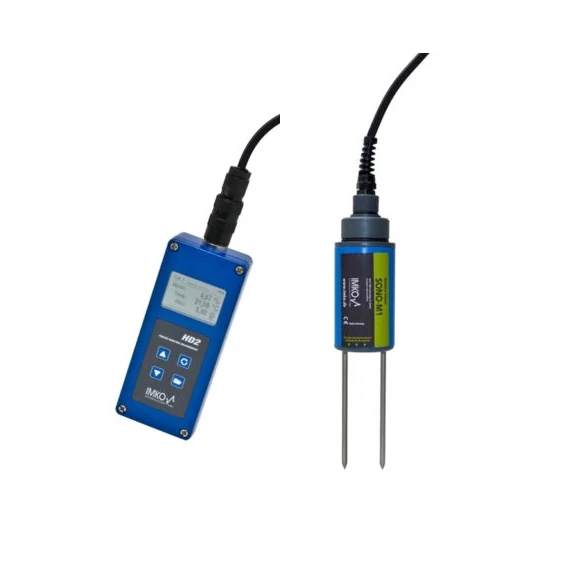
HD2 + SONO M1
Handheld meter for sand, gravel, crushed stone and expanded clay. Reading in about two seconds, straight from the stockpile.
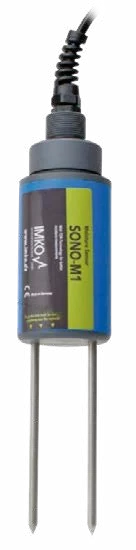
SONO M1C
Coated-rod version of the M1 for high-conductivity materials that defeat standard probes.

SONO M2
Slimline probe for deeper penetration into a stockpile. Telescopic extension reaches two metres.
What this stage does not tell you
A delivery reading is a snapshot. It describes the pile at the moment you took it, and stockpile moisture keeps moving after you walk away — drainage continues, weather changes, and the loader works into different material. If you need moisture on every batch rather than at every delivery, that is a job for a fixed probe at the dosing stage.
Delivery — frequently asked
How accurate is a portable aggregate moisture meter?
The SONO M1 uses TRIME TDR and reads through roughly a litre of material rather than a surface patch. Because the measuring distance is unaffected by abrasion on the probe surface, accuracy holds as the probe wears and wear does not require recalibration.
How long does a reading take?
About two seconds. The HD2 displays gravimetric moisture and temperature, with individual readings and a running average shown together so you can take several across a pile and work from the average.
What is the largest particle size it can measure?
Up to 32 mm, which is 1-1/4 inch. That covers sand, gravel and crushed stone, and also expanded clay.
Do I need a different probe for foundry sand or slag?
Yes. Those are electrically conductive and need the SONO M1C with coated rods. Probes are differentiated by resolution and measuring range, and the higher the conductivity range a probe covers, the lower its resolution — so you take the narrowest probe your material allows.
Can I add a calibration for my own material?
Calibrations for all common aggregates are pre-installed, and individual adjustment to your own materials is an option. Data acquisition and advanced parameterization are available with a PC through optional accessories.
Moisture changes at every stage
Sand arrives wet and variable. It gets dosed, mixed, and delivered. A reading at one point does not describe the others.
Not sure this is the right stage to measure?
Most plants start at one stage and add a second once they see the numbers. Tell us the problem you are chasing and we will say where to put the probe.
Houston, Texas · Most quotes answered within one business day