
Materials and moisture ranges
Two things decide which probe you need: particle size and electrical conductivity. Particle size is obvious. Conductivity is the one that catches people out — conductive material will read badly on a standard probe, and no amount of recalibration fixes it.
| Material | Typical moisture % | Particle size | Note |
|---|---|---|---|
| Concrete sand | 2.0–6.0 | 0–4 mm | The largest single moisture variable in the mix. |
| Coarse aggregate | 0.5–2.0 | 4–32 mm | Lower and steadier than sand, but not zero. |
| Crushed stone | 0.5–2.0 | 4–32 mm | Angular material, abrasive on inline heads. |
| Gravel | 0.5–2.0 | 4–32 mm | Rounded, free-draining, moisture sits low. |
| RAP | 1.0–5.0 | up to 32 mm | Recycled asphalt pavement. Drives burner fuel cost. |
| Foundry return sand | 2.0–7.0 | 0–4 mm | Conductive. Use the coated-rod M1C. |
| Blast furnace slag | variable | 0–32 mm | High conductivity — coated rods required. |
| Fly ash | variable | powder | Conductive fine material. |
| Expanded clay | variable | up to 32 mm | Lightweight aggregate, high absorption. |
| Quartz sand | 2.0–6.0 | 0–4 mm | Processing, drying and screening operations. |
Two families, split by conductivity
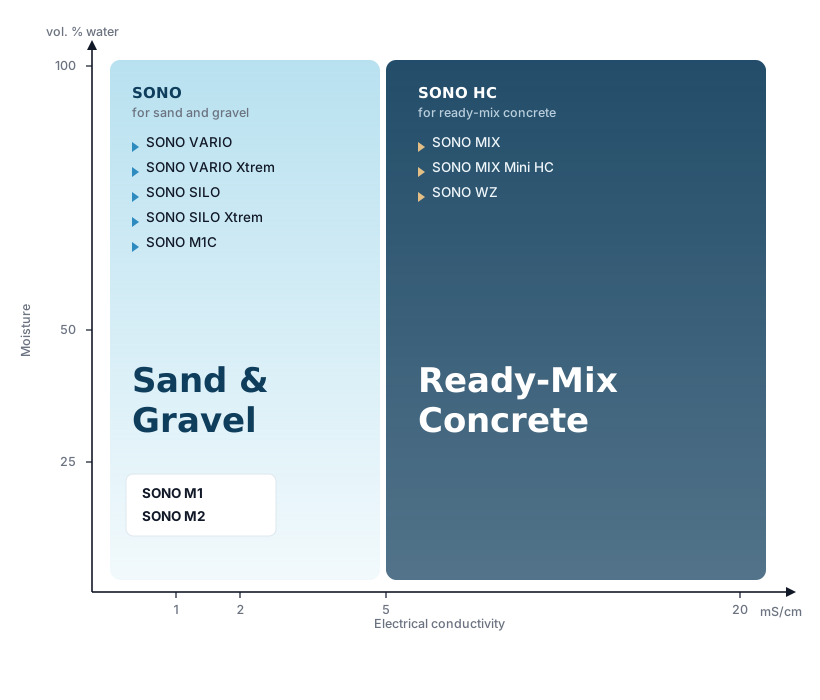
Every probe in the range sits somewhere on this chart. The vertical axis is how much water the material carries; the horizontal axis is how electrically conductive it is. Conductivity is what divides the range in two, and it is the axis most people ignore until a probe reads badly.
Sand, gravel and crushed stone sit on the left. Ready-mix concrete sits on the right, because cement paste is ionic and conducts. A probe built for the left of this chart will not resolve properly on the right.
0–4 mm is sand. 4–32 mm is everything else.
Fine material up to 4 mm goes to a sand-class probe. Gravel and crushed stone from 4 mm to 32 mm need a coarse-service head — the measuring field has to see past the voids between stones.
SONO VARIO Standard and SONO SILO Standard handle sand and gravel up to 8 mm grain size with a stainless head. Above that, or where the material is genuinely abrasive, the Xtrem versions carry a replaceable hardened-steel head with a special ceramic window.
Material not on the list?
Fifteen calibrations ship as standard and custom materials can be added. Send a description of the material and we will tell you whether it needs a custom calibration.
Houston, Texas · Most quotes answered within one business day